
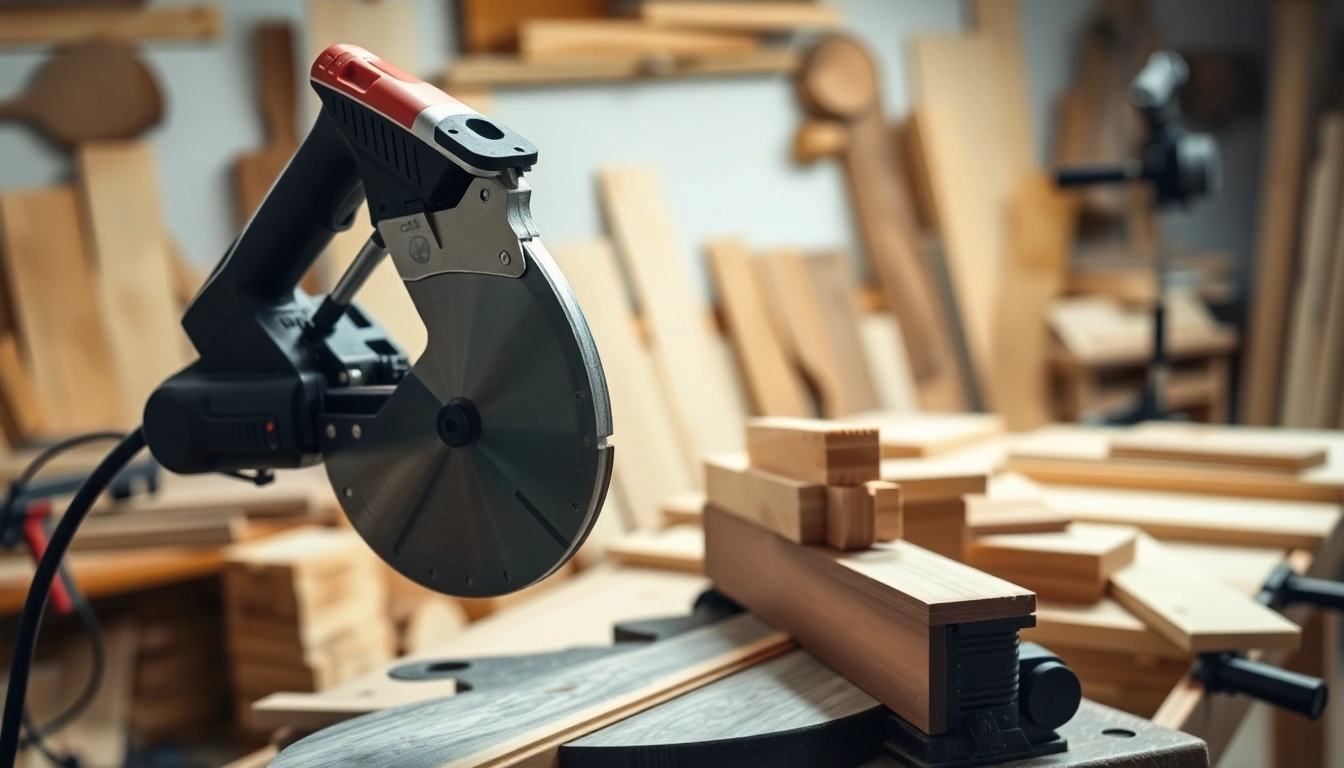
Understanding Hand Miter Saw Fundamentals
What is a Hand Miter Saw?
A hand miter saw is a precision hand tool designed for making accurate crosscuts and miters in wood and other materials. It features a sharp blade and typically operates by being manually pushed along a stationary base, allowing users to create angled cuts needed for various construction projects. Ideal for hobbyists and professionals alike, the hand miter saw combines simplicity with functionality, making it a staple in any woodworking toolkit.
Key Components of Hand Miter Saw
The main components of a hand miter saw include:
- Blade: The cutting surface that performs the actual cutting. Blade material varies for different wood types and application specifics.
- Base Plate: A stable platform that provides support for the material being cut and is often marked with angle measurements.
- Handle: The grip section of the tool that provides leverage and control during the cutting process.
- Miter Gauge: An essential feature that allows the saw to be set to specific angles for precise cuts.
- Locking Mechanism: This feature secures the saw at the desired angle, ensuring accuracy and stability during cutting.
How Hand Miter Saw Works
Using a hand miter saw is straightforward. The user selects the desired cutting angle, usually ranging from 0 to 45 degrees, secures the piece of material on the base plate, and then guides the blade down through the workpiece. The saw’s design allows it to cut at an angle, which is essential for creating joints or specific shapes in woodworking projects. By maintaining a steady hand and following guidelines marked on the base plate, users can achieve precise cuts that are crucial for various applications, from framing to fine furniture making.
Choosing the Right Hand Miter Saw
Factors to Consider
Choosing the right hand miter saw involves several key factors:
- Material Type: Different materials require different blade types. For example, cutting hardwood may necessitate a blade with more teeth to achieve a smooth finish, while softwood may perform better with fewer teeth.
- Blade Size: Hand miter saw blades typically range from 10 to 12 inches in diameter. The larger the blade, the deeper the cut, so consider both your project needs and your comfort level with larger blades.
- User Experience: Beginners may prefer a simpler model, while experienced users might opt for advanced features that support complex cuts and adjustments.
- Budget: Prices for hand miter saws can vary widely. Evaluate your budget while also considering quality, brand reputation, and warranty offerings.
- Portability: If you plan to move your saw frequently, a lightweight design might be best, while a heavier model can offer more stability and durability for stationary use.
Comparing Different Hand Miter Saw Models
When comparing various models, consider the brand reputation, user reviews, and the specific features they offer. Some renowned brands may include options specifically designed for professionals, boasting greater durability and precision. Innovative models may also include features such as laser guides for a more accurate cut, detent stops for common angles, or even built-in vices to hold materials securely in place.
Best Practices for Selection
To select the optimal hand miter saw for your needs, follow these best practices:
- Conduct thorough research on different models and manufacturers.
- Read customer reviews to gauge satisfaction and potential concerns.
- Determine your primary usage scenarios—whether professional or hobbyist—to guide your features selection.
- Test the handle and weight of the saw to ensure comfort and ease of use.
- Look for models with safety features such as blade guards and ergonomic designs to improve performance and minimize risk.
Techniques for Using Hand Miter Saw
Essential Cutting Techniques
Mastering a few basic techniques will enhance your efficiency when using a hand miter saw. Always start with determining your cut angles accurately using the miter gauge. For beginner users, making test cuts on scrap wood can help fine-tune your technique. Additionally, remember to apply steady pressure while pushing the saw through the material to ensure even and accurate cuts. Leaning into the cut rather than forcing it can mitigate common errors and enhance the overall quality of your work.
Safety Tips for Hand Miter Saw Operation
Safety should always be a priority when using a hand miter saw. Here are some essential safety tips:
- Always wear personal protective equipment (PPE) including safety goggles and gloves.
- Ensure the area around the saw is clear of distractions and hazards.
- Check that the blade is sharp and properly installed before commencing any cutting tasks.
- Do not compromise on stability; ensure the workpiece is securely held during cutting to prevent kickback.
- Immediately disconnect the saw from power when making adjustments or changing blades to reduce injury risk.
Common Mistakes to Avoid
Even experienced craftsmen can make mistakes. Common errors with the hand miter saw include:
- Failing to measure and mark cuts accurately, leading to wasted materials.
- Cutting without proper supports, which may lead to unstable cuts.
- Neglecting blade maintenance, which affects the sharpness and efficiency of cuts.
- Rushing through cuts, which can undermine precision and safety.
Maintenance and Care for Hand Miter Saw
Cleaning Your Hand Miter Saw
Regular cleaning is vital to the longevity and functionality of your hand miter saw. After each use, remove sawdust and debris from the base and blade using a brush or compressed air. Pay special attention to the blade itself, ensuring that sap and wood residue do not accumulate, as this can impact cutting performance.
Sharpening the Blades
Keeping the blades sharp is critical for optimal performance. Dull blades not only make cutting more labor-intensive but also result in poor-quality cuts. Depending on usage frequency, consider sharpening blades regularly using specialized sharpening tools or take them to a professional for servicing. Always follow safety guidelines when handling sharp blades to prevent injuries.
Understanding Wear and Tear
Hand miter saws, like all tools, experience wear and tear over time. Regularly inspect the saw for signs of damage or excessive wear, such as loose handles or uneven blade rotation. Replace worn parts promptly to maintain performance and safety standards. Additionally, store your hand miter saw in a dry, protected area to avoid rust and other environmental damage.
Innovative Projects with Hand Miter Saw
Creating Furniture with Hand Miter Saw
The versatility of the hand miter saw makes it ideal for creating custom furniture. Projects like dining tables, bookshelves, and chairs can all benefit from the precise angles achieved with a hand miter saw. By using this tool, hobbyists can craft stylish and functional pieces that fit their space and reflect their personal style.
Using Hand Miter Saw for Home Renovations
Home renovation projects often require the accuracy and adaptability of a hand miter saw. Whether installing molding, creating cabinetry, or framing doorways and windows, this saw simplifies complex cuts, essential for a professional finish. Leverage its capabilities to enhance various renovations throughout your home.
Advanced Techniques for Experienced Users
For the seasoned woodworker, mastering advanced techniques with the hand miter saw can elevate your projects significantly. Techniques such as compound cuts, where angles on two different planes are used, can create stunning results in furniture design. Additionally, using jigs can help streamline intricate cuts and improve accuracy. Understanding how to fine-tune the saw’s adjustments will further enhance the craftsperson’s work.